
Retirees' True Cost of Avoiding Risk
The stock market has been kicked in the teeth lately, which always begs the question “is holding stocks too risky?”. For investors who aren’t able to wait out corrections, the stakes are even higher.
The stock market spoiled us all over the prior 18 months, enjoying strong returns (a double from the S&P 500 lows in March 2020) while experiencing historically small drops along the way. Risk-free returns don’t last forever though, as we’ve been rudely reminded.
But is now the right time to sell stocks and take “less risk?”
Below are 3 reasons most people shouldn’t:
1. The Crisis Has Never Been Permanent
In January 1957, The S&P 500 index was 40. Today it sits well above 4000. Here’s a brief list of challenges prior to Covid it overcame (while growing 100-fold):
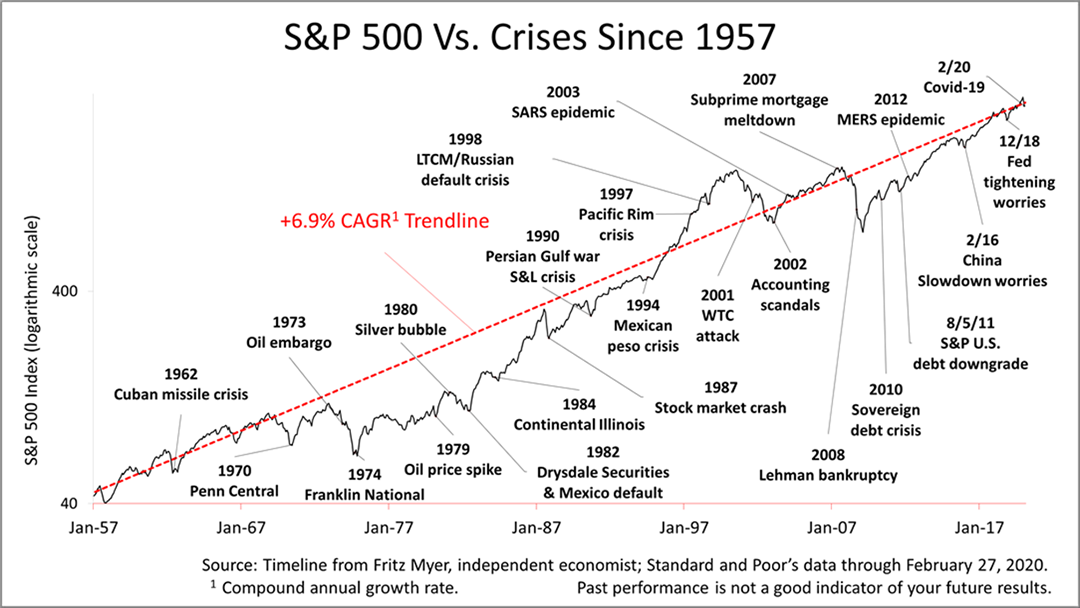
Investors who panic-sold during any of the above crises turned temporary declines into permanent losses. Those who held fast (through gritted teeth) saw full market recoveries and subsequent gains.
If you’re tempted to sidestep market drops while “waiting for the dust to settle”; Remember 34% of the market’s best days (a full 1/3 of all gains) took place in the first two months of a bull market—before it was clear a new bull market had begun.
The historical conclusion is that there’s never been a crisis we haven’t recovered and grown from. The end may always be near, but it’s never actually arrived.
If all those events above turned out to be excellent entry points for further investment, will this one be any different?
2. Most People Cannot Afford the Price of Less Risk
Fixed-income investments that guarantee investor principal are low risk. Today, those low-risk investments are yielding the following:
|
Fixed Income |
Annual Yield* |
|
Savings Account |
0.50% (Marcus) |
|
5-Year CD |
1.2% (Capital One) |
|
10 Year Treasury Bond |
2% (Treasury Direct) |
*Data as of 3/1/2022
This means if you’re a retired investor who needs $50,000 annually from your portfolio, you could invest:
$1 Million in a “risky” investment portfolio (which sustains a 5% annual distribution)
or $2.5 Million in 10-Year Treasury Bonds
or $10 Million in Savings/Money Market
The truth is, most retirees who need income aren’t multi-millionaires, and cannot afford the price of a risk-free portfolio.
Therefore, taking investment risks to achieve higher income is often more practical than locking in a lower income to experience less volatility.
3. Fixed Income vs. Growing Dividends
Most people’s single biggest financial risk is outliving their money. If the low yields from fixed income weren’t discouraging enough, consider this:
THE INCOME IS FIXED
That means a 10-year treasury bond yielding 2% today will never increase its payout.
However, dividend-paying stocks have a history of increasing their payout by 5% annually (on average).
If you compare a 2% fixed-rate bond to 2% dividend-paying stock (with 5% annual increases) you’ll see the effects are dramatic over a decade:
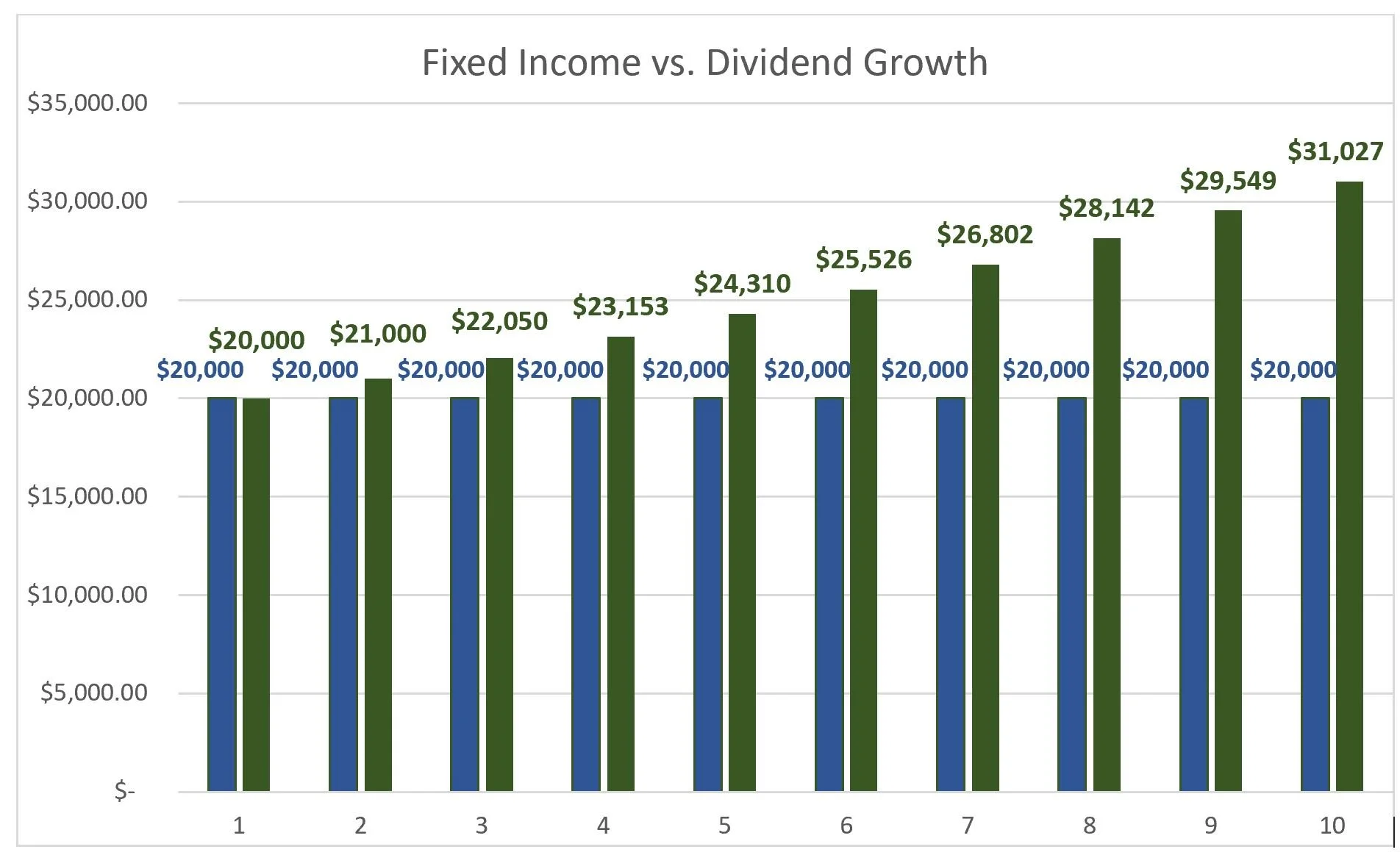
The dividend payments increased a whopping 55% over the first 10 years, while the bond interest never increased.
Which investor do you think was able to protect and increase their purchasing power over time?
If you’re worried about the markets and have questions about your retirement income strategy, give us a call today at 530-487-1777. We’ve helped hundreds of investors like you align their investments with their long-term needs.