
How and why you should take advantage of our historically low tax environment
“I think you should bite the bullet and pay the tax now.”
The couple is as uncomfortable hearing it as I am saying it. Nobody wants to write a check to the IRS. But in their situation, and many others, it’s clear:
We are, objectively, federally, and historically, in a low-tax-rate environment. And that probably won’t last.
With several tax provisions scheduled to sunset, maximizing this low-tax window through proactive, tax-aware asset location and wealth planning looks attractive.
Here’s why:
Today's Tax Brackets Are a Historical Bargain
It might not feel like it when you look at your pay stub, but compared to the last century, taxpayers are getting a break.
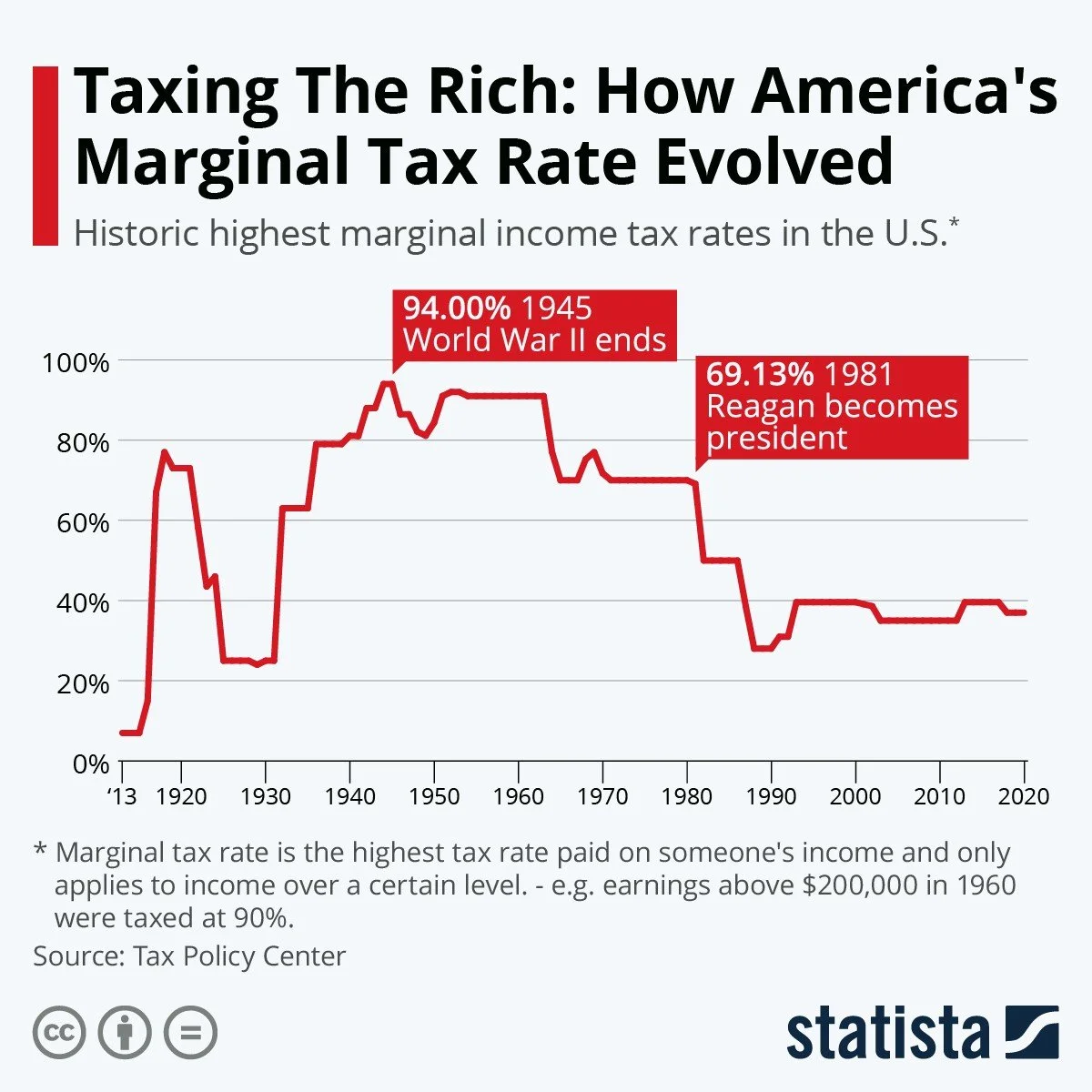
1. Income Brackets are at a Historic Low: At 37%, today's top marginal individual rate is much lower than the 70% norm of the 1970s, or the 94% (!!!) peak we saw in 1944.
2. Corporate Rates Have Bottomed Out: The flat 21% federal corporate tax rate is the lowest since 1939. This represents a dramatic drop from the 35% rate present just a decade ago, and a steep decline from the 52% rates of the post-WWII economic boom.
3. The Estate Tax is Nearly Extinct: With lifetime wealth transfer exemptions currently sitting at an unprecedented $13.6 million per individual (and over $27 million for married couples), fewer than 0.1% of U.S. estates are actually subject to the federal estate tax.
4. Capital Gains Face Friendly Ceilings: The top long-term capital gains rate caps out at just 20% (plus a 3.8% Net Investment Income Tax for high earners). This keeps investment taxes low compared to the near-40% effective peaks of the late 1970s.
5. Standard Deductions Are Doing Heavy Lifting: Following a recent near-doubling of the standard deduction, roughly 90% of American households no longer need to itemize deductions to lower their tax bill.
Let’s put that standard deduction into perspective. It currently sits at $32,200 for a married couple. That number increases to $47,500 for seniors aged 65 and older with the standard senior and bonus senior deductions.
Stated differently: If you are over 65, the first $47,500 you earn is federally tax-free.
It is not guaranteed to remain this way for long.
The Debt, the Deficit, and the $100 Million Problem
“If you owe the bank $100, that’s your problem. If you owe the bank $100 million, that’s the bank’s problem.”
The United States has a problem. Government tax receipts are at all-time highs, but spending is higher. Recent spending-cut initiatives haven't fully worked, and Congress didn’t make the temporary cuts permanent.
The consequences are mounting. The national debt is over $40 trillion. The U.S. credit rating has been downgraded repeatedly over the last 15 years, prompting some countries to look for alternative reserves. Meanwhile, interest rates are rising (just hit the highest level in over 20 years) as investors demand higher returns to offset inflation and the government's shifting credit quality.
We’ve written about this before- it’s not necessarily a doomsday scenario. BUT- nearly every road toward improving our nation's finances includes more taxes.
Beware new taxes and the Trickle-Down Effect
If history has taught us anything, it’s that taxes designed for the ultra-wealthy rarely stay there.
Tell me if this sounds familiar: Progressives look to reduce tariff revenue, redistribute wealth, and shore up government balance sheets by introducing a highly targeted tax on the rich.
That was the populist Revenue Act in 1913. It created an income tax aimed exclusively at the richest Americans. The starting rate was just 1%, scaling up to 7% for the Rockefellers, Carnegies, and Vanderbilts of the world.
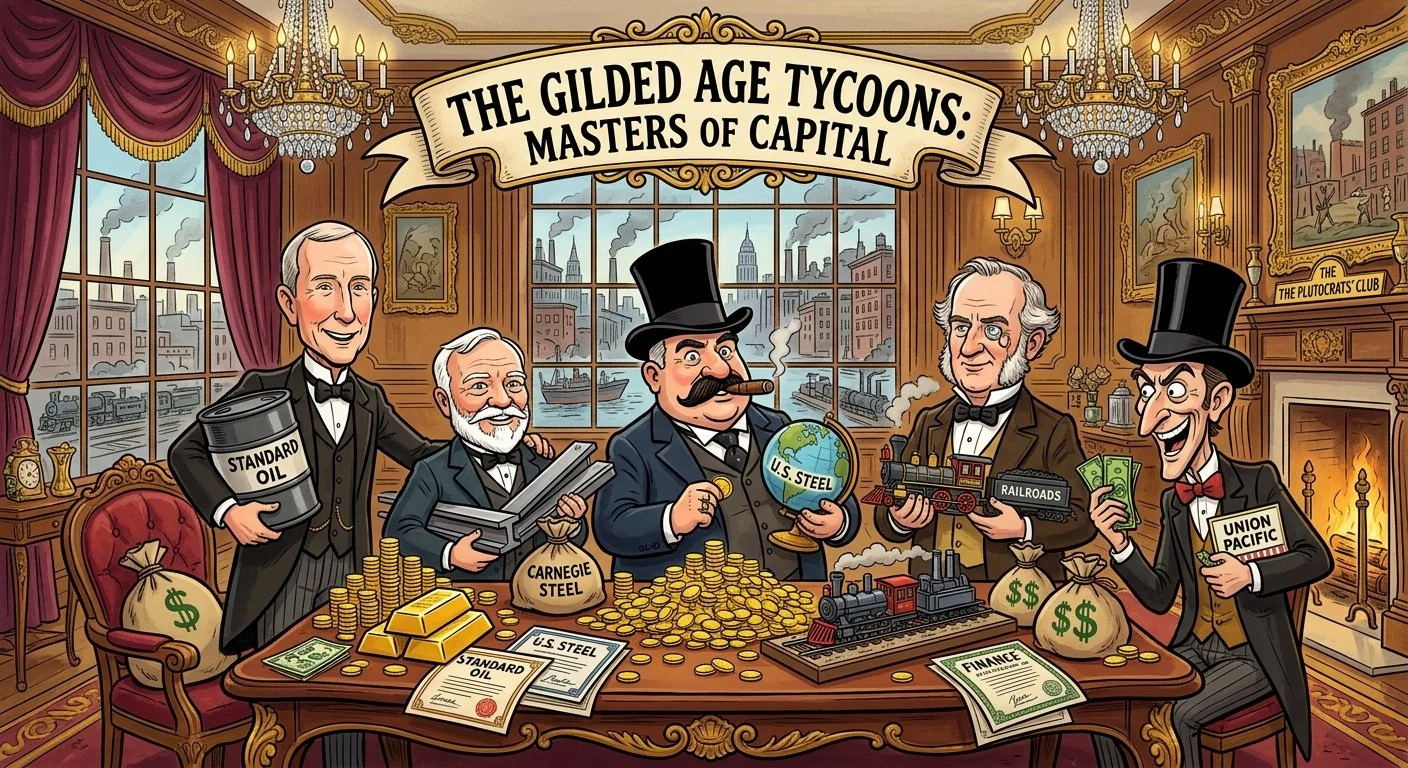
Within five years, the top rate spiked to 77% to fund World War I.
By 1945, nearly 75% of all Americans were taxpayers. The “class tax” was now a “mass tax”.
The “Billionaire wealth Tax"
Today, the heated discussion centers around a billionaire wealth tax (like Prop 40) championed by politicians like Rep. Ro Khanna. Proponents insist it will only apply to billionaires. But Khanna himself has already outlined the broader vision:
That’s a 2% annual tax, roughly $1 million per year, on wealth that was already taxed when it was earned and will be taxed again when it’s spent.
Color me skeptical that this philosophy won’t eventually trickle down like every other major tax in American history.
Strategic Planning for the Future
Nobody knows exactly what the next politician, the next election, or the next year will bring. But we do know exactly where we stand today.
All things considered, if you’re in a position to capture some income from a bonus, execute an IRA-to-Roth conversion, or lock in long-term capital gains right now, you should strongly consider doing it. Current tax rates are likely a limited-time offer.
Biting the tax bullet isn't fun, but future you will be glad you did.