
3 Charts: Why I Don't Understand the SpaceX Valuation
IPO’s are rarely a great investment. It’s well documented.
The difficult thing about investment markets today is that companies stay private (read: growing without public market money) way longer than they used to. We talked about how 5 of the Mag 7 stocks started at valuations of less than $2 Billion. Like child actors, they grew up in public. Shareholders who held as they became trillion dollar stocks saw 500x returns.
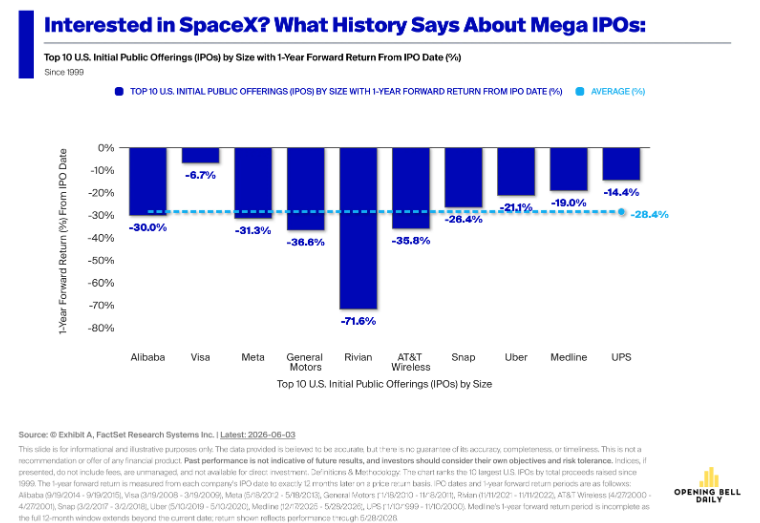
Mega IPO’s haven’t had a great immediate return
Today’s companies are staying private longer, making their public debut as fully developed companies. recent examples are Uber ($75 billion), Rivian ($66 billion), and Facebook ($104 billlion). These companies weren’t new, just new to you. Initial returns were largely negative:
If you Musk
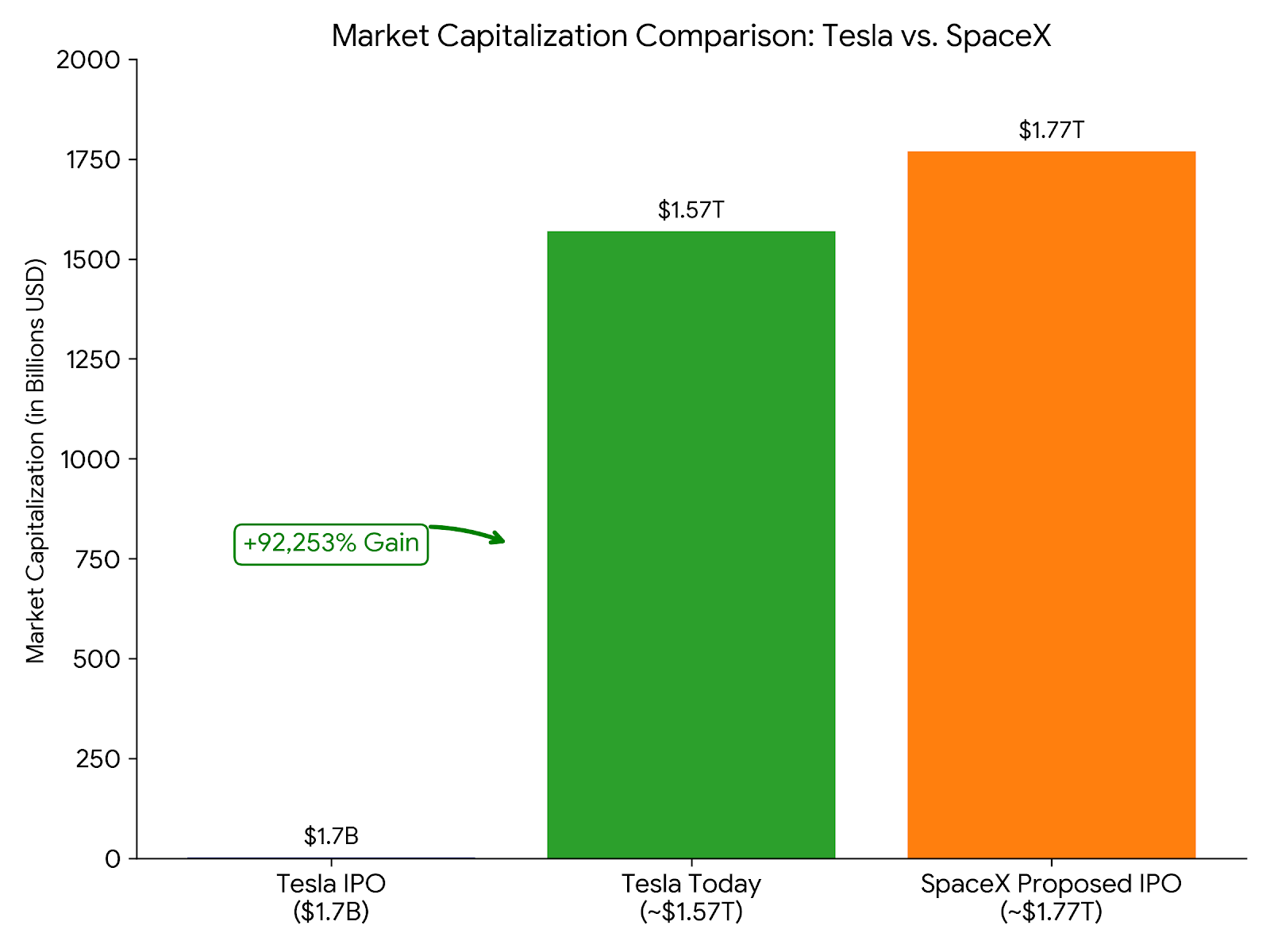
Most people will point to Elon Musk’s success with Tesla as a reason to buy Spacex. If you believe in the man and believe in the management, that’s fine. Keep in mind that the Tesla comparison stops there. The bar was much, much lower with Tesla, and federal tax credits incentivized EV buyers. The company started as a small-cap and (after flirting with bankruptcy ) ended up becoming a powerhouse. The size is beyond compare:
Isn’t tech always a good bet?
In short- no, nothing is true 100% of the time. Earnings matter. Market share matters. For every one Netflix we forget about Quibi, Playstation Vue and Redbox bankruptcy. Here’s a list of Tech IPO’s and their ensuing returns:
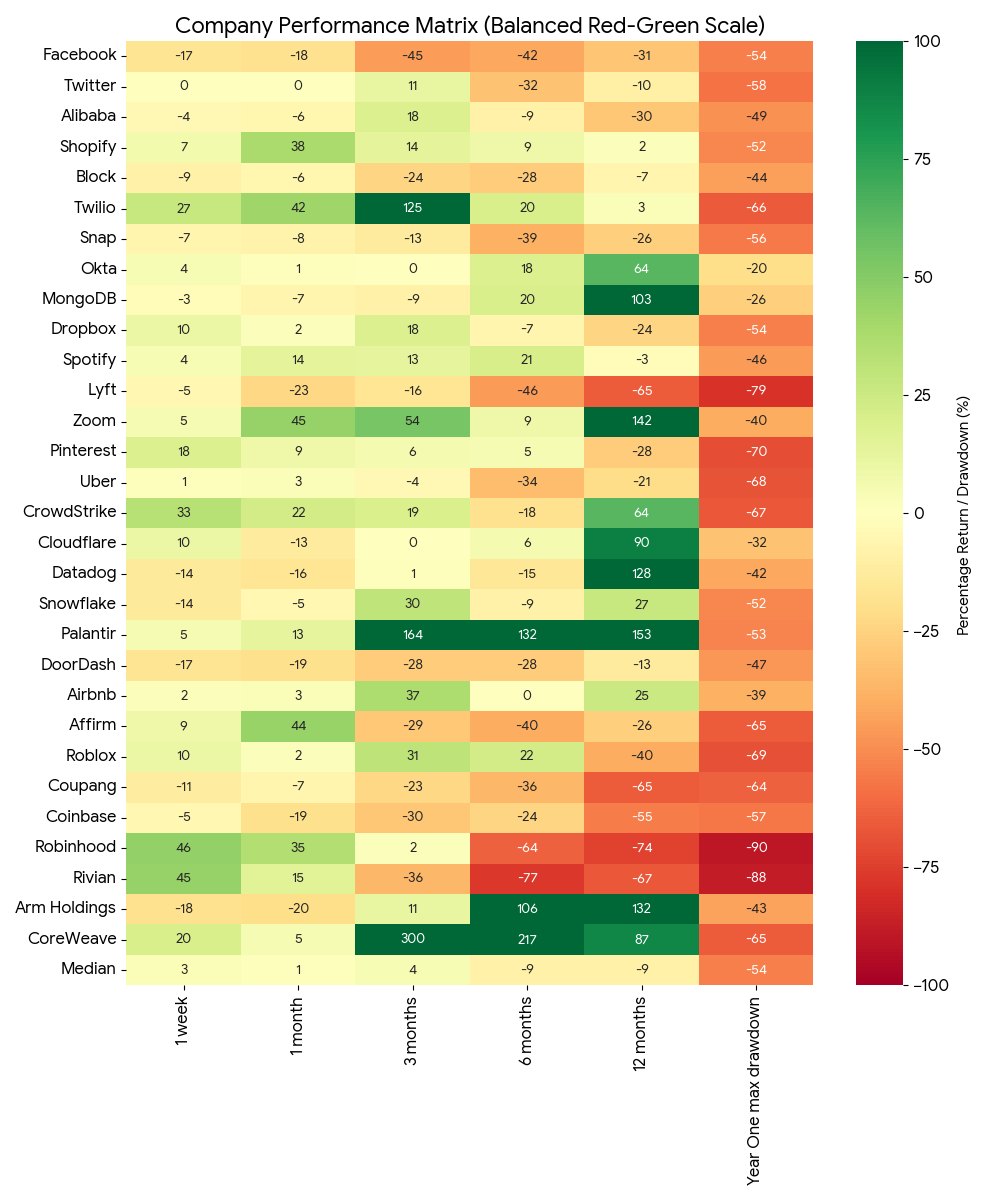
The median 12 month return is -9%, with an intra-year decline of over 50%
Closing Thoughts
Starlink seems cool. Even if it replaces all telecom companies ($2.1 Trillion, unlikely), it gets your stock price to break even on the initial fundraising round.
I’m not smart enough to understand why we need to colonize Mars.
There’s plenty of land (have you ever driven down I-5).
Supply chains in space seem harder than on Earth (look at our current issues with the Straight of Hormuz)
I’ve been wrong many times before, but history says the math on this one isn’t great.
Of course, we don’t have any comps on interplanetary travel, so my skepticism might be misplaced. Maybe the gravity of math weighs less when valuations start in the stratosophere.
One piece of advice- check your flight plan:
If you want to own it (and it drops) make sure you commit to hold it for a long time (so earnings can possibly catch up) or know where the escape hatch is regarding your pain tolerance.